
Sam Rubin on Why Defenders Are Now in an Arms Race
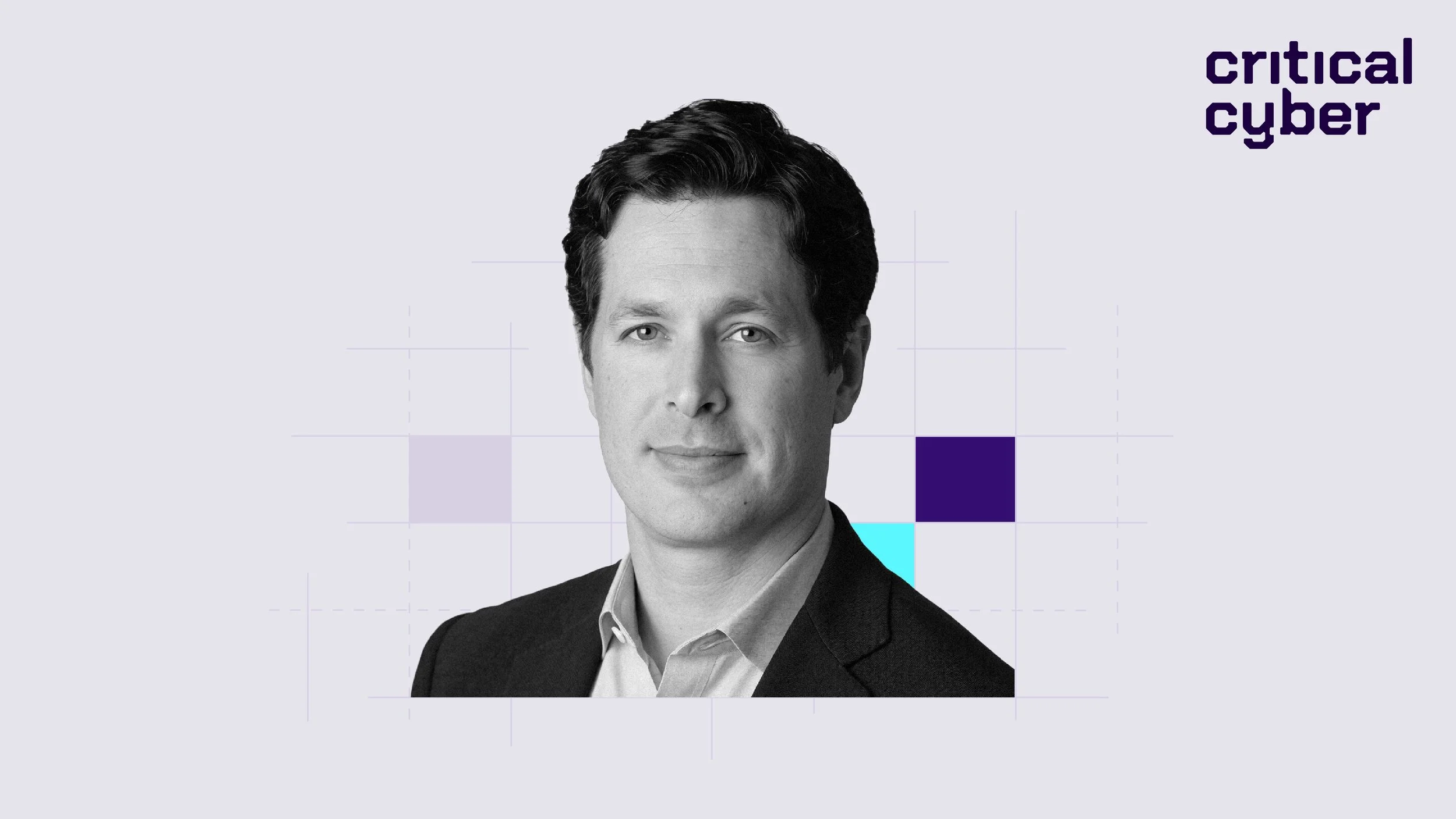
Sam Rubin is Senior Vice President at Unit 42, the threat intelligence and incident response arm of Palo Alto Networks. His team runs close to a thousand incident-response investigations a year—the calls that come in once an attack has already escalated beyond what an organization’s own security team can manage. As AI compresses the time between an attacker gaining access and causing real damage, Rubin argues that the central danger right now isn’t the technology itself; it’s that many organizations still don’t understand that the window to act has shrunk.
“It commonly takes a very public, disruptive cyberattack to become the seminal moment that makes an industry change.”
When Unit 42 gets the call, what does the first hour inside a victim organization look like?
When we get the call, typically what has happened is that things have escalated out of control. Most of the organizations we work with are large enterprises or public-sector organizations with a certain measure of internal capability—they have people in a security operations center who know how to do a certain level of response.
But when Unit 42 gets the call, it’s escalated beyond what those internal teams can manage themselves, to a level of operational disruption. Systems are down, products can’t be sold, customers can’t be served, or the threat is so pervasive that the client doesn’t know how to get their arms around it, and they say, “We need help.”
In those first couple of hours, the analogy we often use is triage—helping them stop the bleeding. If there’s data moving out, or the threat actor is actively engaged in the network, we’re taking steps to contain that activity, so things don’t get worse.
Palo Alto Networks’ 2026 Global Incident Response Report found that in the fastest cases, attackers go from initial access to data exfiltration in about 72 minutes—four times faster than the year before. How is AI driving that acceleration?
What we’re seeing is that attackers are adopting AI across the entire attack lifecycle. In how they find and enumerate targets—if they have a vulnerability, or a phishing or voice-phishing tactic, they’re using AI methods to scale the identification of potential victims. They’re using it to gain initial access by exploiting a vulnerability. And once they’re in, they’re using it to go from one account to a more privileged account with broader access. AI is also used to find the sensitive information they can steal.
And we’re even seeing it, from time to time, in the negotiation and communication with the victim—scaling and automating the back-and-forth: “We’ve stolen your data, and if you don’t pay us in Bitcoin or some other crypto, we’re going to leak it.”
The net effect is that it allows the adversary to go much faster from finding the target to the negative impact—and to do it at scale. Where they might previously have focused on one or two targets, now they can set up a workflow where they enumerate and go after dozens, even hundreds of targets concurrently.
What does this speed and capability mean for vital services, like a hospital or a school district? What can realistically happen in little more than an hour?
Unit 42 has done many incident response investigations for healthcare organizations across the broad spectrum of the healthcare ecosystem, including those that give direct patient care.
One of the most critical situations is when patient care is disrupted because the systems that support it are down—like electronic medical record systems, scanning or imaging systems. Or simply because part of the network is encrypted, and the third-party providers that connect in to support patient care all have to disconnect because they’re worried that the infection will spread from the victim to their own organizations. If every provider disconnects, the system is down, and it can’t support ongoing patient care.
We’ve seen that many times, in different attacks, where healthcare organizations have had to revert to paper records, or where certain services simply couldn’t be delivered. There was a well-publicized incident in the U.S. where people couldn’t fill prescriptions because of what happened to a particular provider. These are some of the most painful and visceral impacts of this type of attack that we see.
Tell me about a publicly reported incident that stayed with you—not for its technical sophistication, but for what it did to people.
I testified before Congress about two years ago on the impact of ransomware. One of the other people testifying led part of the administration at the University of Vermont Medical Center, which had suffered a very severe ransomware attack. In his testimony, he talked about the operational impact of that attack being more painful and disruptive for the hospital than what they dealt with during the early surge of COVID—in terms of patient care challenges, cost, and the burden on the healthcare system. I think that’s a good example of the impact of cyberattacks on people.
As frontier AI models spread across both offense and defense, how do we close the gap so defenders in critical services get access to them? And what happens to the cyber-poor organizations, and even nations, left behind?
What we’ve seen, from our own testing at Palo Alto Networks as well as from our response investigations, is the power of these frontier AI models in finding vulnerabilities—they’re a very effective technology for exposing the cracks that let adversaries break into an organization and carry out an attack.
What’s absolutely necessary right now is that every organization has an obligation to act ahead of time, to use this technology itself to find and fix that exposure. There’s still a measure of upgrading security that only an organization can do for itself, and that’s where people need to act. It’s hard, from an understanding and integration perspective, and many organizations don’t have access to the most advanced defender-grade AI models. That access gap is exactly the problem that needs solving, and it’s a lot of what drives the work we do at Unit 42—getting those defender-grade capabilities to the organizations that need them, so they can find and fix what’s exposed before an adversary uses the same kind of model to attack them.
Responders live inside other people’s worst days. How are they coping with the stress, especially now when the threat accelerates, and how do you make sure your team is protected?
I can tell you firsthand: the team is incredibly busy. We support hundreds of organizations, if not thousands, globally, and we run close to a thousand global incident-response investigations a year. For the past six months, that’s only intensified—customers are calling for help, and we’re responding to a lot of incidents every day. That’s incredibly stressful. The phone keeps ringing, and the team is fighting fires every day.
We’re built to cover it—we have a global team with 24/7, 365-day-a-year, follow-the-sun coverage, from the United States into Asia and into Europe. But that persistent level of attack is still challenging. The adoption of AI makes it feel like an arms race: we see the adversaries going faster, so we know we need to go faster too.
Looking out for our clients and our team is very important. When clients call us in that first moment, they’re often panicked, going through what is, professionally, the worst moment of their careers. A big part of my team’s job is to be the steady hand through that crisis. My team has done this hundreds of times a year—but it’s also stressful for them.
What we try to do internally is, first, give them places to talk about what they’re seeing and how they’re feeling, and give them a break. That’s probably the most important thing we do. The work looks like sprints and breaks: we rotate teams that are on for a sprint, fielding inbounds and pushing hard almost non-stop, and then another team comes up behind them—think of it like a baseball rotation. That lets the team that just finished a sprint, once the client is back on its feet, have some downtime. Maybe it’s a day or two off, or a research project—something separate from the firefighting. It’s very important to give them that break.
If you could change one thing in the next 12 months, what would it be?
I think there’s still a big gap in awareness. Organizations large and small, private and public, don’t really understand how the world has changed and what they need to do to get ready. The one thing I’d love to change is simple: I’d love organizations to understand that they need to act now; to find and fix the exposure they all have that’s now findable because of these AI models.
Unfortunately, what we’ve seen in the past is that it commonly takes a very public, disruptive cyberattack to become the seminal moment that makes an industry change. My worry is that there will be another large cyberattack that becomes that moment. I’d love to say, and shout from the rooftops right now: this is your opportunity to find and fix the exposure you have. There is time, there is an opportunity, and we’ve seen that organizations that act proactively end up in a better spot and protected.
Ultimately, I’m optimistic about the future of cybersecurity. But right now is a moment when organizations need to level up their defenses.
