
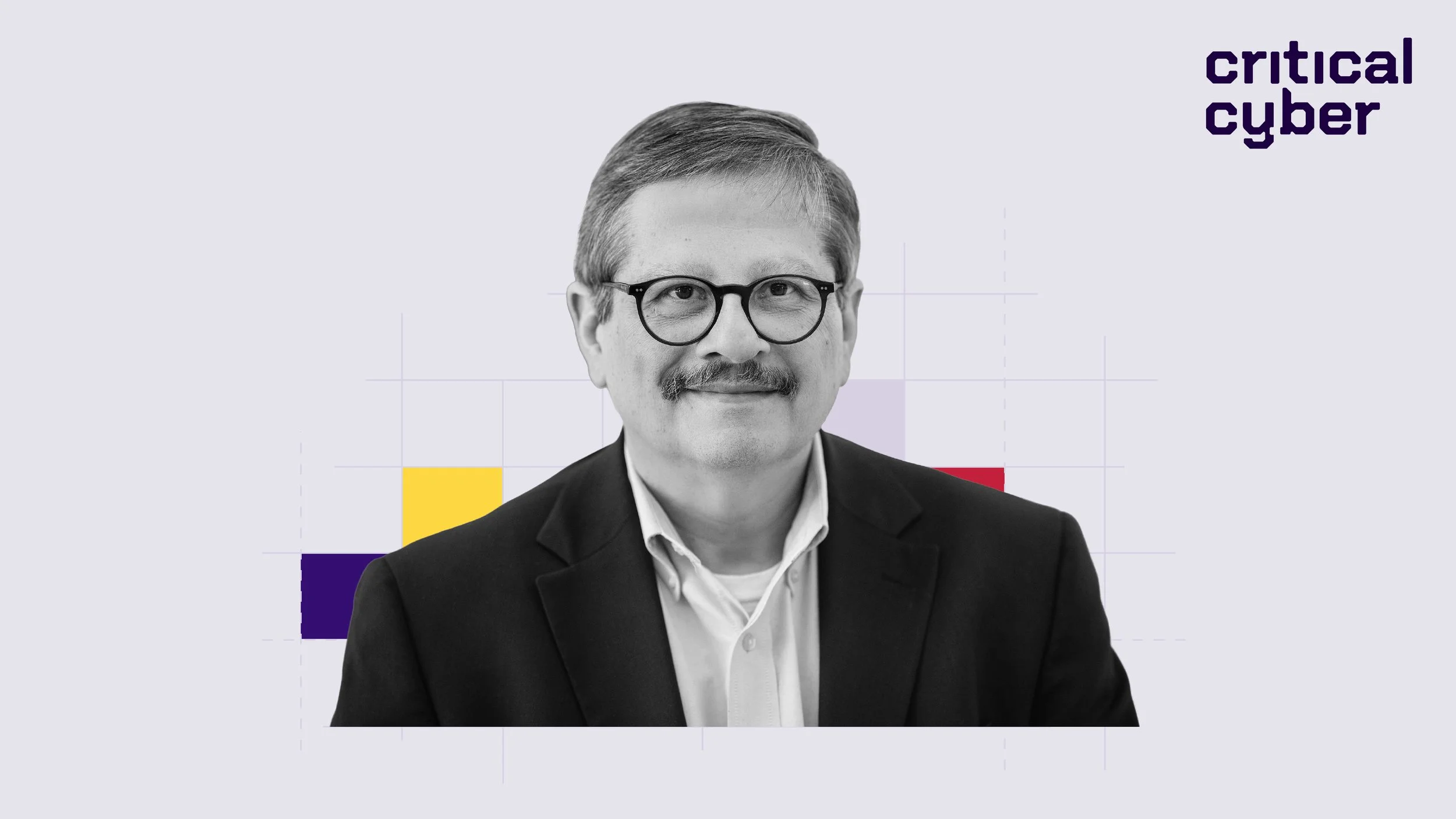
Sami Khoury spent thirty-four years at Canada’s Communications Security Establishment, first in intelligence, then as the organization’s CIO, as Head of the Canadian Centre for Cyber Security, the agency’s public-facing cyber defense arm before retiring as the Government of Canada Senior Official for Cyber Security. He has briefed governments and corporations on the country’s threat landscape, and argues that the victims who worry him most are rarely the ones making headlines: the small and medium enterprises that absorb an attack and sometimes don’t survive it.
“Many small and medium enterprises hit by a cyber incident don’t recover. They go out of business.”
The Canadian Centre for Cyber Security’s national threat assessment shows the volume of incidents going up year over year. Who are the main targets, and what happens to the victims least equipped to recover?
I’d say it’s a spectrum. At one end you have activity against critical infrastructure and government. At the other end you have criminals, and a criminal ecosystem that has been industrialized in recent years and is, in a way, indifferent to the victim. Criminals follow a path of least resistance: they find an opportunity, they exploit it, and they don’t much care who’s behind it, as long as they anticipate a payment.
To be fair, reporting in Canada isn’t mandatory, so the window the Cyber Centre has on the data is small; it’s only what people report, and many don’t. The number goes up and up, but I don’t think that’s reflective of the true volume of incidents Canada sees.
The least equipped—who worry me the most—are small and medium enterprises and the public sector. With small and medium enterprises, there’s sometimes sense of complacency: “why would anybody come after me?” With the public sector, especially municipalities, some of it is chronic underfunding and some of it is technical debt, and the two go together. Those are the victims least equipped to manage an incident, because of under-resourcing and, frankly, cost limitations.
Stats show that many small and medium enterprises hit by a cyber incident don’t recover. They go out of business. And insurance companies have imposed added requirements for policies that cover ransomware.
You’ve pointed to Colonial Pipeline as a case study for Canada to learn from. Four years later, has Canada learned it, or is it still only a cautionary tale?
Canada has learned a lot from Colonial Pipeline. At the national level, the legislation that passed this summer is a good sign, and big energy operators will be subject to it. But it’s only the big national operators—not the subnational or medium-sized ones downstream from them. Supply chain risk management is included in the legislation too, which is another thing we learned.
There are also things communicated through best practice rather than law, like segmentation between the IT network and the OT network. That’s not in the legislation, but it’s something my former colleagues at the Cyber Centre are still advocating for, because what really worried people about Colonial Pipeline was the actor jumping from IT to OT: you exploit the IT side, then pivot to OT, and it becomes a lot more dangerous.
Colonial Pipeline has taught us a lot about decision-making under pressure, about how you segment a network. But the ultimate lesson is when it shows up in a budget. It’s one thing to say an HR system is down. It’s another to say I have to shut down the production of natural gas, or the operation of an airport, because somebody exploited a web browser.
Public warnings about ransomware have been circulating for years. The attacks haven’t slowed. Has the response improved?
I’d say the response has improved, but I wouldn’t finish the sentence there, because the malicious actors have also changed their tactics. At first they encrypted the system, and we didn’t have backups, so we started encouraging organizations to have backups. Then the actors changed tactics: they don’t encrypt as much anymore, because they know you’ll just say, go away, I have a backup. So they started stealing information instead. You can have a backup, but once they steal your information and threaten to release it publicly, there’s not much you can do.
We’re getting better at deploying defenses, but ransomware is still the number-one threat organizations face. My message has always been: you don’t have to spend a ton of money to make yourself secure, as long as you’re more secure than the next scan. If everyone does the basic hygiene—MFA, patching, backups, passwords—then eventually the malicious actor says, Canada’s too complicated, I’ll go elsewhere. The malicious actor has a budget too, and their budget is determined by how much effort they want to spend trying to hack into your organization. If they try a few things and it doesn’t work, unless you’re really in their crosshairs because you have something valuable, they’ll move on to the next item on their list.
What is your biggest fear, seeing how AI is increasingly used in cyberattacks?
The biggest fear is the speed, the scale, and the lowering of the bar for attackers. If I go back fifteen, twenty years, the people doing cyberattacks were very sophisticated operators. Now the bar keeps getting lower, and AI is basically allowing somebody with pretty much no knowledge to become a cyberattacker; it gives them speed and scale on top of that. Those three combine to cut the cost of reconnaissance, cut the cost of phishing. You can write a beautiful phishing email in any language and never know it wasn’t written by somebody who doesn’t speak that language, just because of the quality of the AI models.
The other thing that worries me is the window between vulnerability discovery and patching. You find a vulnerability, or you use AI to find one. If you’re not going to disclose it, you exploit it right away. Even with responsible disclosure, it still takes a few days before it’s patched, and in the meantime that window is open for exploitation.
And the last thing is deepfakes, video or voice. One of my biggest fears is that it erodes trust, because I don’t know if that’s really the person I’m talking to, or a deepfake of them. The quality keeps improving, and it removes the signals you used to be able to pick up on. It erodes trust in society, especially after an incident where you thought you were speaking to someone, money was attached to it, and it turns out you weren’t.
And what is your biggest hope for the defense?
On the hopeful side, AI brings enormous opportunities, and it’s important people don’t think of it as just doom-mongering. There’s a lot of good that comes with faster triage, detection, code review, secure-by-design. Frankly, it’s our battle to lose as defenders if we don’t use AI right. It’s good at a lot of things individually—you can do triage by itself, code detection by itself—but orchestrating the whole machine is still challenging, and the question becomes: where’s the human in the loop? The hope is that over time we get better at those individual functions, but also at orchestrating the whole end-to-end machine to detect and respond to malicious attacks. We also shouldn’t overlook the governance side of this. AI is becoming a business enabler, and the consequences of deploying it have to be well governed.
One part of minimizing harm to individuals is cybersecurity preparedness. The other is resilience. What are organizations still missing on the resilience side?
Resilience is my favorite word, but it’s a loaded one that means many things to many people. The center of gravity has shifted from prevention to preparedness. Are you prepared for when it happens? That’s the real indication of resilience: are you prepared to operate in a crippled IT state, to keep delivering services to citizens if you’re a government, to keep pumping oil or gas or flying planes if your systems are impacted? Imagine a new Colonial Pipeline. How are you prepared for the day your HR system is hit and you have to shut down your gas distribution? Tabletop exercises have to be a lot more inclusive in their scenarios, and they have to involve executives and the board, because the decision to shut something down is a business decision.
The other thing organizations miss is the people side of resilience. I’ve been through incidents where staff worked twenty-four, thirty-six hours straight—dedicated people who want to do the right thing, but at some point they burn out, fatigue kicks in and they start making mistakes, or don’t see clearly. Do we have the capacity to withstand an incident that drags on for more than a couple of hours? Do we have the protocols for handover, so someone can actually go to sleep and someone else can take over, and know what to pick up from where they left off? It’s not just technology, not just having spare parts; it’s also having spare human capacity to run through the incident.
You’ve spent your career briefing governments and corporations on threat levels. What would it take to bring the victims into the room?
What it would take is an acknowledgement by the organization that it has been a victim of a cyber incident. That’s the biggest challenge. The victims also rarely ask: why are we still dealing with cyber incidents in 2026? Why is my surgery being cancelled because of one? It has to become part of public discourse, for people to feel comfortable enough to say: this is a cyber incident, and my surgery was delayed because of it.
You also need a media ecosystem that’s sensitive to that. Today media chases the headline “there’s been a cyber incident” and then moves on to the next story. We had a major healthcare incident in Canada in 2021: an entire province’s health system shut down for weeks, people were flown out of province, surgeries were delayed. It ended up being ransomware. But at the beginning, the whole media focus was on who did it, was it ransom, are you going to pay, how much. There was little on the human impact of the health care system being down.
Name one reform that would close the accountability gap fastest for the people living through these attacks right now.
It’s great that the Canadian Parliament passed new legislation, which requires designated operators in federally regulated critical sectors to report cyber incidents to the government and meet baseline cybersecurity obligations. Still, while I am not a lawyer, I often hear a lot of companies asking for Safe Harbor provisions. There’s also no redress for individuals. If you’re the victim of a data leak, companies will often offer you free credit monitoring, but after that, I don’t know what you can do. Safe harbor and victim support—those are two things I’d look for opportunities to implement.
